Monday, 3 January 2011
Media Activity: Visual Recall - 6
In the "Thor" trailer, a number of characters appear throughout. Firstly, we see groups of workers in an office, dressed in suits, which represents authority and power. Next, we see a group of doctors in uniform - light blue, which connotes calmness. In another shot, we see a SWAT team aiming with their guns. They are all dressed in the same uniform, in black; this presents them as unified, and having power. The figure that we assume to be the main character is first seen with blonde, shoulder length hair and a scruffy beard. His untidiness presents him as a rebellious character, and his dark coloured clothes emphasise his confidence and importance. Warriors in heavy armour are featured in the trailer, also. Their armour has a similar connotation as the SWAT team’s uniform – teamwork and unity. Women aren’t featured a lot in the trailer, and when they are, they are wearing elegant Greek/Roman gowns with jewellery on. Their costumes present them as of a high class and importance. The only other women featured is the main character’s love interest, and she is mainly dressed in black, which suggests that she is mysterious, sophisticated and elegant.

Media Activity: Aural Recall
For this activity, I watched the promotional trailer to "Thor", to be released in May 2011. An ominous score can be heard throughout the trailer, establishing the tone and, as the trailer builds up the tension, it subtly changes to heavy metal music. Distinct, diegetic sounds of fighting, explosions, knife wielding and screaming, both in pain and victory, are featured in order to present the film as a somewhat violent action adventure. When dialogue is heard, it is of loud, booming voices, often two or more characters shouting and asserting their authority. Words such as "sacrifice", "fate" and "war" are emphasised, emphasising the genre of the film. Explicit sounds of rain, thunder and wind are played all the way through.
Monday, 6 December 2010
Any Human Heart
What's The Story?
From watching the first five minutes of the second episode of 'Any Human Heart', I worked out that it is set during the Spanish Civil War in the 20th century, and the characters featured are all upper class and wealthy. The clip, and possibly the rest of the episode, centres on a novelist who is working as a journalist in Barcelona while he also strives to complete a second novel. He is married, but is having an affair with another married woman that he met on holiday. His wife wants a baby, and so he is torn between who to choose - whilst adjusting to the Spanish way of life.
Sunday, 21 November 2010
Discuss how Eastenders uses camera shots, sound, mise en scene, editing to construct representations of ethnicity
Eastenders is a long running British soap which depicts the lives of the residents in the fictional borough of Walford, London. Each episode focuses on a number of characters and their situations, which continue on from the previous episode.
Eastenders - 18-11-10 (mark: 26.30-29.00)
Camera Shots
There are various good examples of ethnicity's being represented in this clip. Firstly, there is a mid shot of a boy and his parents speaking in the hallway. The mother and father are dressed in traditional Asian clothing, which connotes that their ethnicity is Asian. Behind them, only seen for a few seconds, is a frame with Arabic calligraphy on it, suggesting that they are a Muslim family. There is also an over-the-shoulder shot of the parents, the boy, and an Asian girl appearing out of a door in the background. The mother is grabbing her son's face in her hands, signifying that she is typically a mother than worries for her children. The son is looking surprised, because of his mother's action, but there is also a hint of worry on his face, as if he has soemthing to hide, which could be exposed. The girl appearing from the door could be what he is hiding. This one shot conveys the Asian ethnicity as not too dissimilar from any other ethnicity, becuase of the mother's strict behaviour towards her son. It also connotes a level of secrecy or rebellion within the community, as if having the girl over at his house would get the boy in some sort of trouble, and so her presence is unwelcome.
Sounds
The Asian woman at the beginning of this clip speaks with a mild accent, highlighting her ethnicity to the audience, but her husband and son speak with a London accent, which show the intertwining of the two cultures. Diegetic sound is also featured in this clip, and one example of this when a man walks out of his daughter's room, slamming the door behind him. The sound of the door slamming suggests there is tension within this ethnicity or culture, similar to the connotations of the shot of the Asian family.
Another example of diegetic sound being used is when a teenage girl is using her laptop, we can hear the keyboard tapping and the mouse clicking. This represents white people as culturally accepting of cyber technology; the laptop is in her room, which suggests that it is used regularly and for various things.
Mise en Scene
The mise en scene in this clip represents the two ethnicity's explicitly. Firstly, the Asian mother's clothing is very traditional, and the decorations and colour are very distinct, especially as they clash with the colour of the walls; this emphasises her ethnicity to the audience. In the over-the-shoulder shot featuring the Asian parents, their son, and the girl, there is an obvious difference in their clothing. The parents' clothing is traditional dress, and the boy and girl are wearing more Western clothes, connoting a divide between the two generations; the older generation is traditional and conservative, and the young people are more inclined to blend in with their westernised culture. It also signifies that the two cultures, although they are part of the same ethnicity, get along well - apart from the tension caused by the boy's actions.
The shot of the man talking on the phone tells us that the older generation of his ethnicity are also users of digital technology, and the fact that he is wearing a clean, pressed suit suggests that he is wealthy and hard working - although the background depicts a more working class area that he might live in.
Editing
The shot of the Asian family and the white family transcend through jump cuts, which show us the similarity of the situations of the two ethnicity's: parents scolding their children, and having significant power and authority over them. The jump cuts also show the difference between the two ethnicity's, as it highlights the difference in dress and houses. They give the sense that there is tension within both ethnicity's - tension of a similar kind, and also break continuity of the actions of one family to the next, building pace and exaggerating the unease that has been established.
Eastenders - 18-11-10 (mark: 26.30-29.00)
Camera Shots
There are various good examples of ethnicity's being represented in this clip. Firstly, there is a mid shot of a boy and his parents speaking in the hallway. The mother and father are dressed in traditional Asian clothing, which connotes that their ethnicity is Asian. Behind them, only seen for a few seconds, is a frame with Arabic calligraphy on it, suggesting that they are a Muslim family. There is also an over-the-shoulder shot of the parents, the boy, and an Asian girl appearing out of a door in the background. The mother is grabbing her son's face in her hands, signifying that she is typically a mother than worries for her children. The son is looking surprised, because of his mother's action, but there is also a hint of worry on his face, as if he has soemthing to hide, which could be exposed. The girl appearing from the door could be what he is hiding. This one shot conveys the Asian ethnicity as not too dissimilar from any other ethnicity, becuase of the mother's strict behaviour towards her son. It also connotes a level of secrecy or rebellion within the community, as if having the girl over at his house would get the boy in some sort of trouble, and so her presence is unwelcome.
Sounds
The Asian woman at the beginning of this clip speaks with a mild accent, highlighting her ethnicity to the audience, but her husband and son speak with a London accent, which show the intertwining of the two cultures. Diegetic sound is also featured in this clip, and one example of this when a man walks out of his daughter's room, slamming the door behind him. The sound of the door slamming suggests there is tension within this ethnicity or culture, similar to the connotations of the shot of the Asian family.
Another example of diegetic sound being used is when a teenage girl is using her laptop, we can hear the keyboard tapping and the mouse clicking. This represents white people as culturally accepting of cyber technology; the laptop is in her room, which suggests that it is used regularly and for various things.
Mise en Scene
The mise en scene in this clip represents the two ethnicity's explicitly. Firstly, the Asian mother's clothing is very traditional, and the decorations and colour are very distinct, especially as they clash with the colour of the walls; this emphasises her ethnicity to the audience. In the over-the-shoulder shot featuring the Asian parents, their son, and the girl, there is an obvious difference in their clothing. The parents' clothing is traditional dress, and the boy and girl are wearing more Western clothes, connoting a divide between the two generations; the older generation is traditional and conservative, and the young people are more inclined to blend in with their westernised culture. It also signifies that the two cultures, although they are part of the same ethnicity, get along well - apart from the tension caused by the boy's actions.
The shot of the man talking on the phone tells us that the older generation of his ethnicity are also users of digital technology, and the fact that he is wearing a clean, pressed suit suggests that he is wealthy and hard working - although the background depicts a more working class area that he might live in.
Editing
The shot of the Asian family and the white family transcend through jump cuts, which show us the similarity of the situations of the two ethnicity's: parents scolding their children, and having significant power and authority over them. The jump cuts also show the difference between the two ethnicity's, as it highlights the difference in dress and houses. They give the sense that there is tension within both ethnicity's - tension of a similar kind, and also break continuity of the actions of one family to the next, building pace and exaggerating the unease that has been established.
Sunday, 14 November 2010
Silent Witness - Representation of Ethnicity
In an episode of 'Silent Witness' entitled "Terror", ethnicity is represented in different ways through camera shots, mise en scene, sounds and editing. I will be discussing the way in which this is done, and what the episode connotes in relation to ethnicity.
Camera Shots
One of the first camera shots we see is a close up of a woman pouring water and washing her hands and face. This signifies a religious aspect to her ethnicity, as we could see it as a representation of a religious cleansing ritual, which is a custom in Islam. There is also a mid-shot of the woman laying out a prayer mat, while wearing a headscarf - this confirms our idea that she is a Muslim woman. It is symbolic of submission and worship, allowing the audience to further understand the woman's ethnicity.
A long shot reveals to us a milkman stopping to deliver milk; traditionally an aspect of British culture, which gives us a sense of location. There is a mid-shot of a locker room, in which an all-white SWAT team are preparing for a break in. This shot connotes unity and equality among the force, whereas we only see one person from a Muslim background - representing isolation within that community.
Sounds
A lot of diegetic sound is used in this clip. For example, the sound of the water being poured conveys nature and peacefulness as a part of Islam, and emphasises her ethnicity, representing it as a key aspect of the episode. In the scene of the SWAT team's locker room, a man is heard cackling in a manic way as he walks out of shot. This sound stands out to us, and foreshadows danger later on, possibly a conflict between the two ethnicities that have been presented to us. We also hear the woman praying, further into the clip. This sound gives the clip a sombre tone, suggesting discipline being part of her ethnic background. As shots of the SWAT team preparing and receiving orders is being shown to us, the sound of the woman praying can be heard clearly, which shows a clear contrast between the tension within the SWAT team and the calmness that the Muslim woman is experiencing.
Mise En Scene
The woman's costume is a blue headscarf and dress. The colour is associated with depth and stability, and symbolises faith and wisdom. It has a calming effect on the viewers.
The SWAT team are dressed in a navy and black, as well as wearing gas masks, giving the impression that they are robotic; it creates a 'new race', as their faces are all covered, so we cannot actually see what their ethnicity's are. The gas masks support the idea of some kind of warfare between ethnicity's.
There is another contrast between the mise en scene of two different shots. The mid-shot of the SWAT locker room is lit with fluorescent white lighting, which is harsh, and again connotes tension and stress within the force. This contrasts with the warm, golden lighting in the Muslim woman's room that symbolises nature and serenity.
Editing
The edits in this clip are important in the representation of ethnicity. Firstly, the jump cuts from shots of the Muslim woman to shots of the SWAT team are juxtaposed in order to highlight the difference in culture. For example, shots of the woman praying cutting to a shot of the team assembling their weapons show a calm and aggressive nature, respectively. The jump cut to the SWAT team outside in the rain break the continuity of the shots of the Muslim woman in her room, emphasises the opposing moods established by each ethnicity - it also leads us to believe that the woman is some sort of threat, and therefore the SWAT team are after her. The shot of the woman clearly shows us her face, identifying her to the viewers, whereas the shots of the SWAT team have them wearing masks, which conceals their identities and therefore creates a bridge between them and the viewers, making it harder for the viewers to connect with them; the opposite is happening with the viewers' reaction to the Muslim woman.
Saturday, 6 November 2010
Desperate Romantics and Downton Abbey - Analysis
I am going to analyse the way camera shots and movement, in the two trailers for Desperate Romantics and Downton Abbey, create and impression of the context, location and characters.
The first trailer is for Desperate Romantics. The very first shot, an extreme close up of a candle which is then blown out, suggests that there is something - or someone - arriving to make some kind of impact. The fact that we cannot see who has blown out the candle adds a layer of mystery to the suggestion. The candle itself gives us a vague idea of the time setting, as we imagine it may be set in a previous century.
The long shot of three men standing together at the door implies that they are the ones who will be making a change. They are standing together, which symbolises a friendship, or brotherhood. The lighting is also important, because the use of a silhouette on these characters conceals their identity and makes us wonder who they are.
There are a few point-of-view shots used in this trailer. One example, is when there is a close up of one the men's faces, showing a look of distaste. It then cuts to a shot of a painting blowing up into shards of glasses. This connotes the idea that these men are here to change the art world, because they dislike the paintings and get rid of them. Another shot which supports this idea is an over-the-shoulder shot, in which we see one of the men walking past a painting as it blows up. It furthers the idea of "rejection of the system", and makes them seem rebellious. The fact that he is walking out of shot as we watch the painting signifies that they are making a change and we are being left behind to see the effects of it.
Finally, there is a medium shot of a man walking out through the cloud of smoke. Along with the soundtrack, David Bowie's "Heroes", it makes the man look like an important figure, one who is deeemed a hero for making this change.
The second trailer, for Downton Abbey, is a montage of clips from the series rather than an unassociated promotional film. The first half of the trailer is a series of clips showing people spying on eachother. One example of this is when a servant, carrying a tray of food, stops and peers through a slightly open door, with a curious expression on her face. There is a very long shot of a woman pushing what looks like a body into a room, which then cuts to a reaction shot a servant gasping in horror at the sight. These clips not only connote that there are secrets and a lack of trust in the household, they also give us an insight to the nature of these secrets.
The second half begins with a number of shots of murders, fights and love scenes, each cutting from one to another at a quicker than pace than before, with the soundtrack, Scala and the Kolacny Brother's rendition of "Every Breath You Take", building up and becoming louder.
It then shows a woman, who seems to be the head of the household, played by Maggie Smith, in several mid-shots and close-ups with a concerned expression on her face. This implies that she is losing control over the household and its inhabitants.
The final scene is and over-the-shoulder shot of a woman walking out of shot, past a framed picture. The framed picture shows someone's reflection in it, looking upset or shocked, perhaps at some news. It suggests that the woman walking out of shot has told the other woman something which has, up until then, been kept secret. It further supports the idea that the people living in the house are spying on eachother.
The two trailers represent the characters, time and setting through camera shots and movement. In 'Desperate Romantics', we are shown three rebellious young men, looking to subvert the standards of the art world, and in 'Downton Abbey' we see the amount of secrecy in the house, the relationships between the characters and the lack of trust they have for eachother.
Monday, 1 November 2010
The Inbetweeners - Deconstruction and Comparison
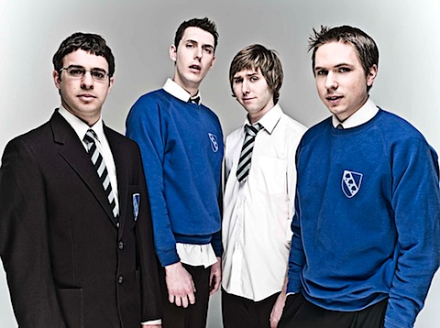
I have chosen to deconstruct the series 3 trailer for The Inbetweeners, as it is my favourite one - purely for being the most humourous, but the representation of young people in it is worth discussing.
The trailer starts off with a shot of the school building, young people dressed in uniform socialising and diegetic sounds of the general hubbub. the camera pans down to a shot of the school signpost; both of these shots appeal to a young audience, as we assume it is set in school or based on school life, things which young people can relate to.
Next, we see a student sitting on his own, eating out of a packed lunch, which suggests that he is a typical 'outcast' or 'loner'. He looks up, open-mouthed at an oncoming vehicle, and out step our four main characters. Immediately, Jay Z's "99 Problems" becomes our soundtrack, which, if we are aware of the song title and lyrics, tells us that the four characters have many problems in their lives, and may be to do with girls and socialising.
Each character steps out of the car, in slow motion, and we see a close up of each of their faces, one by one. They are all looking excited and eager about what may be the first day back at school. It shows all of them in a postitve light. The use of music and the fact that the pace is slowed down significantly, glorify our four characters. As they walk up to school, we see their faces one by ones again; Jay greets a girl, but she responds with a certain hand motion, connoting that she or Jay are sexually active. Simon says hi to a girl, also, but is blatantly ignored, and feels rejected. This somewhat throws the characters off their pedestals; it seems that they are not as important or popular as their entrance may have led us to believe. They seem more like rejects or outcasts, as no one beyond their small social group have greeted or acknowledged them. Towards the end of the trailer, Will is leading his friends to the school building, and this conveys that heymay have found popularity or leadership within his group, but he is hit on the head with a water balloon, bringing him back to reality, as a nerdy target for bullies.
All three trailers are similar as they are all based on the four main characters, and the way they are represented. From the first trailer, we see them in quite a negative light, as Will is having a hard time at home becuase of his parent's split, and a hard time at school, being the 'new kid on the block' and not being able to make many friends. The friends he does make, however, are also depicted in a bad way, as Jay is shown jumping on a car, Simon is throwing up after getting too drunk, and Neil manages to expose himself publicly. On the other hand, the second and third series show these four in a better light, and socialising. But, in a humourous way, as seen in the series 3 trailer, they are still the same socially inept characters we started off with.
Subscribe to:
Posts (Atom)